FREQUENTLY ASKED QUESTIONS (faq)
If you have a question about our products or services that is not listed here, please email: sales@okw.co.uk with your question and our team will get back to you as soon as possible.
DESIGN-IN HELP:
STANDARD ENCLOSURES:
MOUNTING ELECTRONICS IN ENCLOSURES:
CUSTOMISING SERVICES:
MACHINING SERVICES
LACQUERING SERVICES
PRINTING SERVICES
LASER MARKING
DECOR FOILS
SPECIAL MATERIAL
EMC SHIELDING
INSTALLATION & ASSEMBLY OF ACCESSORIES
TUNING KNOBS:
PLASTIC MATERIALS:
DESIGN-IN HELP:
HOW DO I REQUEST A SAMPLE AND/OR A QUOTATION?
Three easy options:
- Simply use the basket system featured in the video above
- or call us on +44 (0) 1489 583858 and talk to our sales team
- or if you prefer, send your requirements by email to sales@okw.co.uk
View full-size video and learn more here >>
HOW DO I DOWNLOAD AN OKW DRAWING OR 3D MODEL?
You can download our product drawings in 2D (PDF, DWG, DXF) and 3D (x_t, step, sat) formats. In order to access our drawings please follow our video guide. Registration is required for drawing files and 3D models (except PDFs).
View the full-size video and learn more here >>
WHERE CAN I DOWNLOAD OKW BROCHURES, ASSEMBLY INSTRUCTIONS AND CERTIFICATIONS?
Downloads available:
- INSIDE company magazine
- assembly instructions
- brochures and publications
- certifications such as our ISO 9001:2015.
Download these from our technical downloads page here >>
WHAT ARE IP RATINGS?
DIN VDE 0470 PART 1 /EN 60529 / IEC 529
The IP mark, International Protection Mark (IEC 529), also known as Ingress Protection Mark, categorises the degree of protection provided by housings and enclosures against the intrusion by foreign bodies, including hands and fingers, dust, accidental contact, and water. The standard is controlled by the International Electrotechnical Commission (IEC) and consists of a simple to use numbering system which provides a consistent standard by which manufacturers can identify the protection provided. See the table below for a full description of each index number.
View our comprehensive guide to IP ratings here >>
WHAT ARE UL 94 FLAMMABILITY RATINGS?
UL 94 is defined as the "Standard for Safety of Flammability of Plastic Materials for Parts in Devices and Appliances testing". This plastics flammability standard is issued by Underwriters Laboratories of the USA.
The standard classifies plastics according to how they burn in various orientations and thicknesses. From the lowest (least flame-retardant) to the highest (most flame-retardant).
Learn more about UL 94 here >>
STANDARD ENCLOSURES:
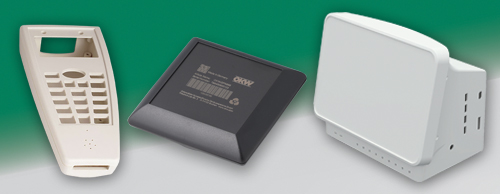
What is a standard electronic enclosure?
A standard electronic enclosure is a pre-designed, off-the-shelf housing for components such as PCBs, displays and connectors. These enclosures are manufactured in a range of established sizes, formats and materials, and are typically available from stock. They are designed to suit common applications – reducing the need for fully bespoke tooling while still allowing customisation such as machining, printing, laser marking, lacquering, decor foils, EMC shielding and assembly of accessories.
View the full range of OKW standard enclosures >>
What are the advantages of choosing a standard enclosure over a custom moulding?
Standard enclosures eliminate the need for expensive tooling and significantly reduce development time. They are available immediately or on short lead times, making them ideal for rapid product development and lower-risk projects.
In addition, they benefit from proven designs, established quality standards and the ability to be modified through secondary operations such as CNC machining and custom branding. This makes them a cost-effective solution – particularly for low-to-medium production volumes.
How do I specify a standard enclosure?
Specifying a standard enclosure typically involves defining the required internal space, external dimensions, mounting requirements and environmental protection (such as IP/IK ratings and EMC shielding).
You should also consider the layout of your PCB, connectors and user interface elements, along with material selection and any aesthetic requirements. Many manufacturers provide CAD models and technical drawings to help ensure compatibility and streamline the design process.
How To Specify Enclosures – read the full guide >>
How can I fit my connectors, displays, keypads and controls in a standard enclosure?
Standard enclosures can be easily adapted using machining processes such as CNC milling, drilling and punching to create precise cut-outs for connectors, displays and controls. Internal features such as PCB pillars, guide rails and mounting bosses assist with alignment and assembly. For user interfaces, additional options such as membrane keypads, front panels or display windows can be integrated to achieve a professional and functional finish.
For further information, please see:
Are standard enclosures economical for devices produced in high volumes?
Standard enclosures can remain economical at higher volumes, particularly when tooling costs for custom mouldings are not justified or when product flexibility is required. However, at very high production volumes, a fully custom moulded enclosure may offer lower unit costs. The decision typically depends on the balance between tooling investment, unit price, lead time and the need for design flexibility.
View our full range of standard enclosures >>
Is it possible to order a standard enclosure in my corporate or design colours?
Yes, many standard enclosures can be supplied in custom colours to match corporate branding or product design requirements. This is typically achieved through custom moulding runs or the addition of lacquering or decor foils.
Colour matching systems such as RAL are commonly used to ensure consistency, although minimum order quantities may apply for non-standard colours.
For further information, please see:
MOUNTING ELECTRONICS IN ENCLOSURES:
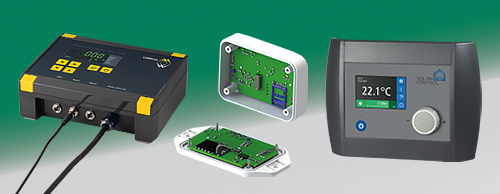
How do I mount a PCB inside an enclosure?
PCBs are usually mounted using integrated bosses or pillars within the enclosure. These bosses/pillars accept screws or clips to secure the board. In some designs, guide rails allow PCBs to slide into position without additional fixings. The mounting method should ensure mechanical stability, correct positioning and adequate clearance for components, while also considering ease of assembly and maintenance.
How do I integrate a display into an enclosure design?
Displays can be integrated by machining apertures in the enclosure and aligning the display module behind a window or transparent panel. Features such as recesses, bezels or support brackets help to position and secure the display. Additional considerations include visibility, protection from impact, sealing against dust and moisture, and the use of anti-glare or tinted windows where appropriate.
How do I design an enclosure for connectors and cable entry?
Designing for connectors and cable entry involves creating accurately positioned cut-outs or openings that match the connector specifications. Adequate spacing should be allowed for mating connectors and cable bend radius. Strain relief features and cable glands may be required to protect connections and maintain sealing. Careful layout planning ensures accessibility, durability and compliance with any relevant standards.
How do I manage heat inside a plastic enclosure?
Heat management in plastic enclosures can be achieved through careful component layout, ventilation and material selection. Vent slots can be added to promote airflow where environmental protection allows. For higher power applications, heat sinks or thermal interfaces may be used to dissipate heat away from critical components. In sealed designs, internal air volume and thermal conduction through the enclosure must be considered to prevent overheating.
How do I design or specify a plastic enclosure when IP-rated sealing is needed?
Achieving an IP rating requires careful design of enclosure joints, seals and interfaces. Gaskets are commonly used between mating parts to prevent the ingress of dust and water. Openings for connectors, displays and controls must be sealed using appropriate components such as O-rings, membranes or sealed connectors. Precise tolerances, suitable materials and consistent compression of seals are essential to maintain the required level of ingress protection.
CUSTOMISING SERVICES:
MACHINING SERVICES
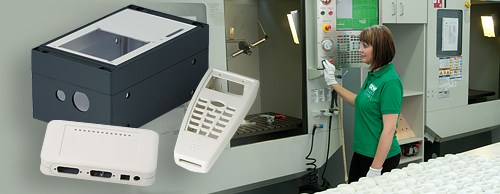
What modifications can you machine into a standard enclosure?
OKW can machine a very wide range of features into standard plastic enclosures. This includes cut-outs for connectors and power inputs, and holes for potentiometers, LEDs, switches and buttons. Apertures for screens, displays and ventilation can be created, along with recesses for labels to support product identification and branding. Text or logos can be engraved (though laser marking might be a simpler and more cost-effective option – especially for consecutive numbering).
Internally, we can modify enclosures with mounting holes and threaded features to suit your components and assembly requirements. All machining is reviewed to ensure structural integrity, appropriate tolerances and compatibility with your design, and we can advise on any limitations such as wall thickness, corner radii or sealing requirements.
Key technical highlights
- Milling cutouts for interfaces, cable inputs and outputs, displays, operating elements and LEDs in plastic and aluminium.
- Tapping threads >M2.
- Recesses to protect membrane keypads, panels and decor foils.
- Reduction of the internal wall thickness to create partial backlighting on surfaces. Allows light from LEDs behind the machined area(s) to shine through. Ideal for temperature or status displays. Preserves the enclosure’s IP rating.
- Machining for press stud fastenings (male or female). Recommended for small enclosures such as BODY-CASE, MINITEC, ERGO-CASE, CONNECT, SOFT-CASE and MINI-DATA-BOX.
- Engraving of all kinds of inscriptions – and laser marking is also available.
Learn more about OKW’s CNC machining services >>
Why OKW for custom-machined plastic electronic enclosures?
At OKW, we use modern 3-axis CNC milling machines to machine enclosures, tuning knobs and accessories from our extensive standard range. Special tools allow burr-free cutting edges.
Key technical highlights
- Delivery of enclosures including machining from a single specialist source ensures quality and accountability. It also shortens delivery time and means fewer carbon emissions.
- Machining can be adapted to process components such as PCBs, switches and connectors. Get specialist technical advice and support from OKW’s production planning staff.
Contact OKW’s expert team >>
What machining tolerances can okw achieve?
Dimensioning should be carried out from the centre to reduce the tolerances of the enclosure parts but other reference points are also possible. With our equipment, we can maintain the following tolerances:
- ± 0.3 mm (± 0.01") for all dimensions to the reference edge of the enclosure
- all other non-toleranced dimensions are subject to DIN ISO 2768m T1.
Consultation is necessary if tighter tolerances are required. These special tolerances must be documented in a drawing. The smallest possible tolerance within the milling pattern is ± 0.05 mm (± 0.002") for plastic and ± 0.1 mm (± 0.004") for aluminium. Duroplastic enclosures are not suitable for mechanical processing due to the brittleness of the material. TPE parts can be machined to a limited extent because of their rubber-like elasticity. Drilling holes in TPE parts is possible only on special request.
For more information about radii, sharp-edged corners, minimum drill sizes and residual wall thicknesses see our machining data sheet.
Download machining data sheet here >>
What information does OKW require for machining enclosures?
Inquiry Stage: Please provide a detailed description of the required machining along with a dimensional sketch or PDF drawing specifying the size of the cut-outs (length, width, diameter).
Order Stage: Please provide a detailed dimensional drawing/sketch containing all dimensions for machining (including clearances). Alternatively, please send us 3D data – preferably as .sldprt, .step or .iges files.
Learn more about OKW’s CNC machining services >>
LACQUERING SERVICES
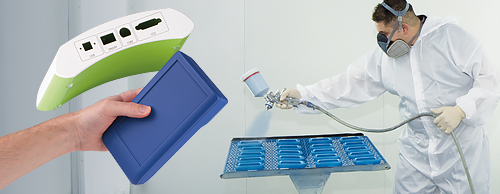
Can your lacquering match our brand colours exactly?
OKW can lacquer enclosures in virtually any colour, including RAL or Pantone, to match your branding or product design.
Learn more about OKW's lacquering services >>
What lacquering finishes are available for plastic enclosures and tuning knobs?
OKW offer a wide range of lacquer finishes to suit both aesthetic and functional requirements. In terms of appearance, you can specify different levels of lustre, from matt and satin through to high gloss, depending on whether you want to reduce reflections or achieve a more premium, modern look. Metallic finishes can also be specified (white aluminium RAL 9006 is available as standard).
Beyond different colours, there are also soft-touch coatings for an improved tactile feel (similar to a velvet or rubberised finish), as well as functional coatings such as ESD-conductive lacquers to prevent electrostatic discharge. Overall, the finish can be tailored to enhance both the look and performance of the enclosure, depending on your application requirements.
Key technical highlights
- High-quality UV-resistant two-component lacquers in different degrees of lustre
- Metallic lacquers, wide range of colour tones
- Soft-touch lacquers (Alexit 401-75 by Mankiewicz) now available in a transparent finish – giving you a greater choice of colours
- ESD conductive lacquer to prevent electrostatic discharges: surface resistance < 1 x 10⁶ ohms (measured in accordance with DIN 53482/VDE 0303, Part 3, electrode configuration A, with a dry film thickness of 50 μm).
- Work is carried out in-house, ensuring high quality, full accountability and short delivery times.
Learn more about OKW's lacquering services >>
Download the lacquering datasheet >>
PRINTING SERVICES
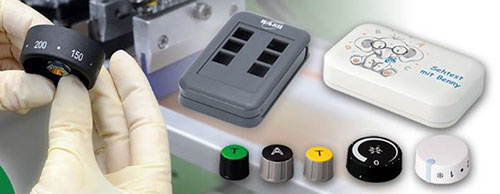
WHICH TECHNIQUE IS BEST FOR PRINTING ON ENCLOSURES AND TUNING KNOBS?
Whether it’s screen, tampo or digital printing, each method offers unique advantages when it comes to durability, detail, flexibility and customisation options. Choosing the right one can make all the difference for your product’s look and performance.
Key technical highlights:
- Screen printing: high opacity, strong abrasion and chemical resistance
- Tampo printing: precise details on curved or irregular surfaces
- Digital printing: fast setup, ideal for gradients and photo images, prototypes and small runs.
Learn more about OKW's printing services here >>
Download the digital printing datasheet >>
Download the screen and tampo printing datasheet >>
LASER MARKING
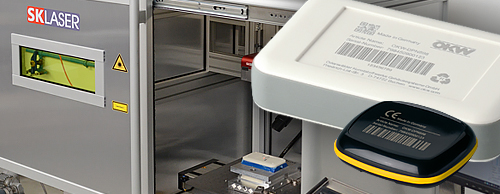
Laser marking – what markings can be added?
OKW’s enclosures and tuning knobs can be laser marked with a wide range of information: text, logos, graphics, symbols, scales and indicators. The process is particularly well suited to individual labelling and identification – including consecutive numbering, barcodes, QR codes and DataMatrix codes, which can be applied quickly and efficiently. Laser marking is ideal where layouts change frequently, such as consecutive numbering or variable data, making it a flexible solution for both prototypes and production.
View OKW’s laser marking service >>
What colours are possible with laser marking?
Laser marking can be carried out on plastic parts in various shades of white, grey and black. The process involves a colour change on the surface. Dark and light plastic parts turn grey at the points to be marked.
View OKW’s laser marking service >>
What materials can be laser marked?
Laser marking is suitable for a range of commonly used enclosure materials including ABS, ASA+PC, polycarbonate (PC), polyamide (PA/PA GF) and aluminium.
However, transparent plastics or highly glossy surfaces may not produce good results. We would always review your chosen material and advise if an alternative would give better contrast or marking quality.
View OKW’s laser marking service >>
How durable is laser marking?
Laser marking is highly durable because it works by altering the surface of the material, rather than applying ink or a coating. This means the marking is resistant to abrasion and will not rub off during normal use. In practice, the markings are waterproof, smudge-proof and long-lasting – making them suitable for demanding environments and products requiring reliable identification.
Key technical highlights
- Laser marking is suitable for a range of commonly used plastics
- Ideal for consecutive numbering, barcodes, QR codes and DataMatrix codes
- Long-lasting resistance to abrasion, water and smudging
- Flexible solution – perfect for applications in which data changes frequently.
View OKW’s laser marking service >>
Download the laser marking datasheet >>
DECOR FOILS
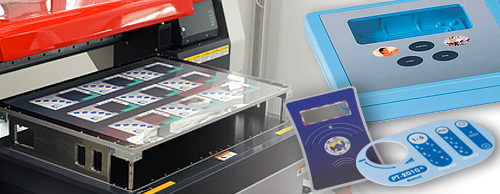
What can be achieved with decor foils on plastic enclosures?
Decor foils allow you to create high-quality, photo-realistic graphics on your enclosure –including logos, text, symbols and full-colour designs. Using digital printing, we can produce everything from simple branding through to complex layouts with colour gradients, technical information and variable data such as numbering or codes.
These foils can be tailored to the user interface. They can incorporate display windows or LEDs, transparent areas, and embossed sections for key functions, making them perfect for front panels and control surfaces.
View OKW’s decor foils service >>
How durable are decor foils? Will they peel or scratch?
The foils are manufactured from polyester material with adhesive layers. They are designed to be applied securely. Digital printing produces robust, light-resistant graphics. And because the foil is a dedicated layer rather than surface ink alone, it offers good durability for typical electronic applications.
Decor foils are suitable for a wide range of applications. They are manufactured to meet environmental directives such as REACH, RoHS and WEEE, indicating they are appropriate for general electronic product use. That said, for more demanding environments – such as high UV exposure or aggressive conditions – it is important to review the application in detail, as performance will depend on factors such as exposure, mounting method and overall enclosure design.
View OKW’s decor foils service >>
Can OKW’s decor foils match our brand exactly?
Decor foils are produced using CMYK digital printing, with the option to specify colours using RAL or Pantone codes. This ensures close alignment with your brand identity.
However, as with any digital print process, there can be minor colour deviations (such as ΔE ≈ 2.5), and certain special colours – such as metallic or fluorescent finishes – may not be achievable with this method.
Key technical highlights
- High-resolution digital printing enables photo-quality graphics, fine detail, gradients and complex layouts, including logos, symbols and variable data
- Polyester-based construction with adhesive backing provides a robust, dimensionally stable layer suitable for long-term use on enclosure surfaces
- Integrated functional features such as transparent windows, tinted areas and embossed sections allow use in HMI applications (displays, LEDs, keypad areas)
- Custom colour matching (RAL/Pantone) is supported, with good accuracy (typically ΔE ≈ 2.5), suitable for most branding requirements
- Compliance with industry standards (RoHS, REACH, WEEE) ensures suitability for electronic products.
View OKW’s decor foils service >>
Download the decor foils datasheet >>
SPECIAL MATERIAL
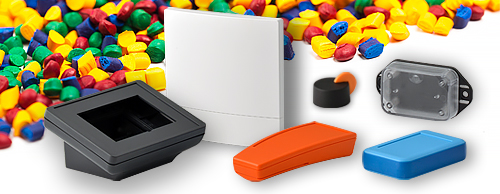
What special materials are available for OKW plastic enclosures and tuning knobs?
OKW offers a number of special material options to tailor enclosures and tuning knobs to your specific requirements. The most common options include custom-coloured materials and flame-retardant plastics.
We can produce parts in individual colours matched to your specification (including RAL or Pantone references) by colouring the base plastic material itself. For safety-critical applications, we can also supply enclosures in flame-resistant materials (such as V-0) on request.
Learn more about specifying special materials >>
Which material is best for my application?
If your priority is branding or product differentiation, a custom-coloured material is integral to the plastic rather than applied as a lacquer. For applications in which safety standards are critical, such as electrical or industrial equipment, a flame-retardant material (such as UL 94 V-0) would be more appropriate. In practice, the expert team at OKW would review your use case and recommend the most suitable option.
Learn more about specifying special materials >>
Do you offer UV-resistant or weatherproof materials?
Many OKW enclosures are already moulded from tough, UV-stable ASA+PC as standard. (ASA+PC also has V-0 flammability resistance). Where an enclosure is moulded from another plastic – such as ABS (UL 94 HB) – as standard, ask us about upgrading to ASA+PC or another V-0 material. PC+ABS (UL 94 V-0), which is standard on our impact-rated SOLID-BOX (IK08), is a robust plastic. Ask the product specialists at OKW about the best plastic(s) for your application.
Key technical highlights
- Custom-coloured plastics with RAL or Pantone colour integrated into the base material – eliminating the need for secondary coatings
- Flame-retardant material options (such as UL 94 V-0) available for safety-critical applications
- Material selection tailored to application requirements – balancing aesthetics, mechanical performance and compliance
- Suitable for further processing, including machining, printing, laser marking and other customisation services – without compromising material performance.
Learn more about specifying special materials >>
Download special material colours datasheet >>
EMC SHIELDING
Do I need EMC shielding for my electronics application?
Without EMC shielding, plastic enclosures provide little to no protection against electromagnetic interference because polymers are non-conductive and behave like insulators. If your device either emits interference or is sensitive to it, EMC shielding is typically required to ensure reliable operation and to help meet EMC compliance requirements. Shielding protects your electronics from both external interference and internal emission noise.
Learn more about EMC shielding for enclosures >>
How can you add EMC shielding to a plastic enclosure?
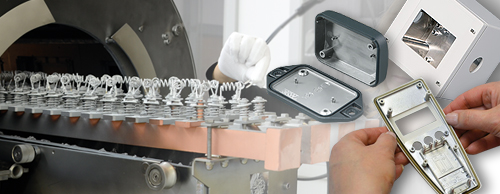
OKW applies EMC shielding by coating the inside of the enclosure with aluminium using a vacuum deposition process: 99.98% pure aluminium is vaporised in a high vacuum and deposited on to the plastic surface, forming a 2.5 µm thick conductive layer that adheres well and enables shielding.
Learn more about EMC shielding for enclosures >>
How effective is EMC shielding?
The aluminium coating creates a conductive layer that forms a Faraday cage. This blocks electromagnetic interference by reflecting and absorbing electromagnetic radiation. Shielding effectiveness depends on factors such as coating thickness and enclosure design but coatings around 2.5 µm thick provide reliable attenuation for many electronic applications.
Learn more about EMC shielding for enclosures >>
Will EMC shielding affect my enclosure design?
Yes, shielding needs to be considered as part of the overall design. Shielding relies on electrical continuity so joints, split lines and openings must avoid gaps that could reduce performance.
Learn more about EMC shielding for enclosures >>
How are seams and openings handled?
Seams and joins are critical, as they can interrupt electrical continuity and reduce shielding effectiveness. To address this, OKW can supply conductive seals in individual sizes from ø 1.5 mm to ø 3 mm (ø 0.059" to ø 0.118"). These maintain continuity between enclosure parts and help to preserve the Faraday cage.
Learn more about EMC shielding for enclosures >>
Does shielding affect IP ratings or sealing?
It can – particularly at enclosure joints. Standard seals can act as an EMC weak point, so conductive gaskets may be required to maintain shielding performance. We would review both EMC and IP requirements together to ensure the correct solution.
Learn more about EMC shielding for enclosures >>
Can you combine EMC shielding with other finishes?
Yes – EMC shielding is applied internally, so it can be combined with external processes such as machining, lacquering or printing without affecting the visible finish. This allows you to achieve both functional shielding and the desired external appearance.
Learn more about EMC shielding for enclosures >>
What is the cost impact of EMC shielding?
EMC shielding is a customising process so it adds cost compared with a standard enclosure. However, because it can be applied to standard plastic housings, it often provides a cost-effective alternative to fully metal enclosures, while still achieving the required shielding performance.
Learn more about EMC shielding for enclosures >>
What are the lead times for EMC shielding?
Lead times are kept relatively short at OKW because the shielding process is carried out in-house, allowing better control over production and delivery. This means EMC shielding can be integrated efficiently into OKW’s overall enclosure customisation process.
Key technical highlights
- Internal aluminium coating via vacuum vapour deposition, using high-purity aluminium (approximately 99.98%) to create a conductive layer inside the enclosure
- Formation of a Faraday cage, providing protection against both emitted and external electromagnetic interference (EMI/RFI)
- Typical coating thickness of around 2.5 µm, delivering reliable shielding performance without significantly affecting enclosure dimensions
- Maintains external aesthetics because shielding is applied internally and can be combined with machining, lacquering, printing or other finishes.
- Compatible with standard plastic enclosures, offering a cost-effective alternative to metal housings while still supporting EMC compliance requirements.
Learn more about EMC shielding for enclosures >>
Download EMC shielding datasheet >>
INSTALLATION & ASSEMBLY OF ACCESSORIES
Can accessories be fitted after purchase or do they need to be pre-installed?
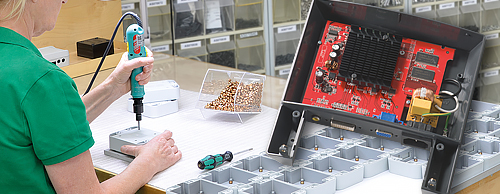
Accessories can be handled either way. OKW can supply enclosures with accessories fully pre-installed and ready for use. Or you can fit them yourself after delivery, depending on your preference.
OKW offers a comprehensive installation and assembly service to deliver a complete, production-line-ready enclosure. This includes fitting accessories such as cable glands, clips, hinges and mounting hardware, as well as bonding decor foils and installing display windows.
Learn more about installation and assembly of enclosures >>
Will installing accessories affect IP ratings or sealing?
This depends on how the accessories are integrated. Features such as cable entries, joints or additional components can potentially affect sealing if not designed correctly. To address this, we can incorporate seals, gaskets and appropriate fastening methods as part of the assembly process, ensuring the enclosure maintains the required level of protection. In practice, we review the full design – including accessories and installation method – to ensure mechanical integrity and environmental protection are maintained.
Key technical highlights
- Comprehensive assembly service, including fitting of accessories such as cable glands, hinges, mounting brackets, display windows and decor foils
- Consideration of sealing and mechanical integrity, with appropriate use of gaskets, fixings and assembly methods to maintain performance (such as IP rating)
- Part of a complete in-house customisation service so fully finished enclosures can go directly to your production line.
Learn more about installation and assembly of enclosures >>
Download Assembly datasheet >>
TUNING KNOBS:
What shaft types do potentiometer tuning knobs fit?
Tuning knobs are designed to fit round shafts, D-shafts (flat), knurled or splined shafts and occasionally slotted shafts. The shaft type must match the knob bore and fixing method to ensure secure attachment and accurate alignment.
View fixing options here >>
What shaft diameters are most common for potentiometer knobs?
The most common shaft diameters are 6 mm, 6.35 mm (¼ inch) and ¼ inch D-shaft. Some miniature potentiometers use smaller diameters such as 4 mm. Splined shafts typically follow manufacturer-specific profiles such as 18-tooth or 24-tooth.
OKW offers tuning knobs for spindles from 3 mm to 8 mm.
How do I choose the correct knob diameter for a potentiometer?
Tuning knob diameter should be chosen based on available panel space, the level of control resolution required and user ergonomics. Larger knobs provide finer perceived adjustment and better grip, while smaller knobs suit compact layouts and simple controls.
What fixing methods are used for potentiometer tuning knobs?
Common fixing methods include grub screws (set screws), push-fit or friction-fit designs, and clamp or collet systems. The choice affects assembly time, tolerance sensitivity and long-term security.
Are lateral-fit, push-fit or collet fixture tuning knobs better for potentiometers?
No single fixing method is universally better. Grub-screw knobs offer flexibility and secure fixing while push-fit knobs allow fast assembly but require tighter shaft tolerances. Collet or clamp-fixture knobs provide excellent concentricity and a premium feel – especially in higher-end equipment. They distribute clamping force evenly around the shaft, minimising wobble and long-term loosening.
How does knob diameter influence control feel and precision?
Larger diameter knobs improve control precision by increasing the arc length per degree of rotation, making fine adjustments easier. They also improve perceived smoothness, while smaller knobs tend to feel more sensitive and less forgiving. OKW’s COM-KNOBS with collet fixing can be specified in diameters as large as ø 50 mm.
What indicator styles are available for potentiometer tuning knobs?
Common indicator styles include moulded or printed lines, stators, pointers, dots, arrows and dials. OKW’s COMBINATION KNOBS feature a wide range of these accessories. Some knobs rely on panel markings instead, depending on the application and visual requirements.
Should I use a pointer knob or a line indicator?
Pointer knobs are ideal where precise or repeatable settings are important, as they give a clear visual reference. Line indicators are simpler and suit applications where relative position (rather than absolute accuracy) is sufficient.
How does panel thickness affect potentiometer knob selection?
Panel thickness affects how much shaft protrudes above the panel, which in turn influences knob height, fixing engagement and clearance. Insufficient shaft length can prevent secure fixing, while excessive length may cause bottoming out inside the knob. OKW can machine panel areas to specific thicknesses.
Can potentiometer tuning knobs be customised? What options are available?
OKW offers various customisation options which can be specified to match branding, ergonomic requirements or specific mechanical constraints. For tuning knobs, these include machining, printing, laser marking, lacquering and installation/assembly (depending on the range specified). OKW carries out all the work in-house to ensure quality and accountability.
how do i stop potentiometer knobs from loosening over time?
Loosening can be reduced by using correct tightening torque, thread-locking compounds, dual grub screws or clamp-style knobs. Ensuring good shaft-to-bore matching is also critical for long-term stability. Contact OKW’s expert team to discuss tolerances.
Do potentiometer knobs need to meet ROHS or REACH requirements?
Yes, potentiometer knobs supplied for use in electronic equipment sold in the UK and EU typically need to comply with the RoHS and REACH directives, particularly regarding restricted substances and material composition. Download OKW’s RoHS and REACH compliance statement from the International Standards section on the Technical Information page.
How do potentiometer knobs affect perceived product quality?
Knobs are a primary user touchpoint so their material, weight, smoothness and aesthetics strongly influence perceived product quality. Poorly fitting or flimsy knobs are a false economy that can undermine confidence in an otherwise well-designed product.
Are premium knobs worth the extra cost in professional equipment?
Premium knobs are often worth the additional investment because they improve usability, durability and perceived value. In cost-sensitive designs, more modest knobs may be sufficient if they do not compromise performance requirements.
What should I ask okw before specifying potentiometer tuning knobs?
Key questions include shaft compatibility, tolerances, fixing method, material performance, compliance with regulations, availability, lead times and customisation requirements. And don’t forget to request a sample.
PLASTIC MATERIALS:
WHAT IS THE BEST PLASTIC MATERIAL FOR ELECTRONIC ENCLOSURES?
‘Best’ depends on many factors including the intended application and the harshness of the operational environment. But as a rule we favour a blend of acrylonitrile styrene acrylate and polycarbonate (ASA+PC) for strength and UV stability. ASA+PC is the standard plastic on many OKW enclosures (though other plastics can be specified on request).
From an engineering perspective, the value of ASA+PC lies in its stability over time. Many enclosure failures are not caused by immediate overload but by slow degradation after years of exposure and thermal cycling. ABS – once a ‘go to’ plastic for enclosures – can discolour and become brittle under UV light, even when used indoors. ASA+PC resists this ageing far better because it replaces the butadiene rubber found in ABS with an acrylic rubber that is resistant to UV light and weathering – dramatically improving durability in outdoor and light industrial environments.
PC+ABS is also an excellent plastic. It is the standard material on our rugged SOLID-BOX (IP 66, IP 67, IK 08) enclosures for industrial electronics. PC+ABS delivers a carefully balanced combination of properties that align closely with the wider demands of enclosure design, rather than excelling in just one area.
By blending polycarbonate with ABS, the material captures much of PC’s high impact strength, thermal resistance and dimensional stability, while retaining the excellent processability, surface finish and cost efficiency of ABS. The result is a material that performs reliably across mechanical, thermal, aesthetic and manufacturing requirements. PC+ABS offers strong resistance to impact, cracking and fatigue. Its toughness remains more consistent across a wider temperature range than ABS alone, reducing the risk of brittleness in cooler environments or softening near internal heat sources.
Despite its UV vulnerability, ABS remains popular in electronic enclosures because it offers a very attractive balance of performance, appearance and cost. For these reasons, it was the plastic of choice for many years (and was the standard material on many early OKW enclosures). ABS provides good stiffness and impact resistance for its cost. It supports thin-wall designs and delivers an excellent surface finish.
View this OKW guide for more information about plastics for electronic enclosures >>
Discover examples in OKW's full range of plastic enclosures >>
ABS VS POLYCARBONATE: WHICH PLASTIC IS BETTER FOR MY ENCLOSURES?
ABS offers excellent electrical insulation. It is typically the better choice where the environment is benign, where internal temperatures are low and when cost, appearance and ease of manufacture are the dominant concerns. ABS moulds easily, has an excellent finish and offers good stiffness and impact resistance for general indoor use. This makes it well suited to office equipment, consumer products and low-power electronics where long-term exposure to heat or sunlight is limited. A number of popular OKW enclosures are still offered in ABS as standard, though other plastics (such as an ASA+PC blend) can be specified on request.
Polycarbonate becomes the better option as soon as mechanical toughness, thermal margin or safety robustness start to dominate the design brief. It retains impact strength across a wider temperature range, resists cracking and maintains mechanical integrity at higher continuous temperatures – which is particularly important for enclosures that contain power electronics or are subject to thermal cycling. Polycarbonate is also widely available in high-performance flame-retardant grades with strong compliance credentials, although it is more expensive and can be more sensitive to certain chemicals and to residual moulding stress than ABS. Polycarbonate can also be specified as transparent, an option for lids on industrial electronic enclosures such as IN-BOX (IP 66, IP 67, IK 08).
In practice, ABS is often better for simple, cost-driven indoor housings (though they can still be vulnerable to discolouration and degradation caused by UV light). Polycarbonate is better for demanding or safety-critical enclosures. Many designers ultimately choose a PC+ABS blend precisely because it occupies the middle ground, retaining much of ABS’s manufacturability while gaining much of polycarbonate’s toughness and thermal performance.
WHICH PLASTICS ARE SUITABLE FOR OUTDOOR ELECTRONIC ENCLOSURES?
Plastics intended for the outdoors must maintain their mechanical properties, dimensional stability and appearance despite prolonged exposure to UV radiation, temperature cycling, moisture and atmospheric pollutants. This immediately narrows the field compared with indoor housings because many otherwise common enclosure plastics (such as ABS) can degrade under long-term weathering.
ASA is one of the most widely used materials for outdoor enclosures because it offers excellent inherent UV resistance and weatherability while retaining good stiffness, impact strength and mouldability. Unlike ABS, it does not rely on UV-sensitive butadiene rubber so it resists embrittlement, colour fade and surface cracking during prolonged exposure to UV rays. For outdoor products where appearance and dimensional stability must be maintained for many years, ASA is often the baseline material.
Polycarbonate is commonly used outdoors – particularly where impact resistance and thermal performance are critical. When properly stabilised, polycarbonate provides outstanding toughness and good high-temperature performance, making it suitable for enclosures likely to encounter impacts, wide temperature swings or internal heat dissipation. Blends such as ASA+PC are especially effective outdoors, combining polycarbonate’s mechanical robustness with ASA’s superior resistance to UV and weathering.
Read this blog post for more information >>
WHICH PLASTIC SHOULD I CHOOSE FOR HIGH-TEMPERATURE ELECTRONICS?
Specifying a plastic for high-temperature electronics is fundamentally about maintaining mechanical integrity, dimensional stability and safety margins during both continuous operating temperatures and short-term thermal spikes. In these applications, commodity enclosure plastics such as ABS are usually unsuitable because they soften, creep or lose strength too close to the temperatures commonly encountered around power conversion, motor control or densely packed electronics.
For many high-temperature electronic enclosures, polycarbonate or flame-retardant PC+ABS is the practical starting point. Polycarbonate offers a significantly higher heat deflection temperature and better creep resistance than ABS, allowing it to retain stiffness and fastener integrity when internal hotspots develop. Flame-retardant PC+ABS extends this capability while improving processability and compliance confidence. PC and PC+ABS are widely used in power supplies, control equipment and safety-critical housings where temperatures are elevated but not extreme.
When temperatures move beyond the comfortable range of PC-based materials, higher-performance engineering plastics become necessary. Polyesters such as PBT (polybutylene terephthalate) can offer improved thermal stability and chemical resistance, particularly in industrial environments, while maintaining reasonable mouldability. For still higher temperatures, materials such as PPS (polyphenylene sulfide), PEI/Ultem™ (polyetherimide) or high-temperature polyamides provide excellent dimensional stability, low creep and strong electrical performance at sustained elevated temperatures, albeit at substantially higher material and tooling costs.
The correct choice is therefore governed not just by the headline temperature rating but by long-term behaviour under load, by the enclosure’s role in safety compliance and by realistic worst-case thermal conditions including abnormal operation. In high-temperature electronics, it is usually better to select a material with a comfortable thermal margin rather than to operate close to a polymer’s limits because enclosure deformation, fastener relaxation or loss of flame performance over time can undermine both reliability and compliance.
CAN PLASTIC ENCLOSURES PROVIDE SUFFICIENT IMPACT RESISTANCE?
Plastic enclosures can provide more than sufficient impact resistance for a wide range of electronic products – provided the material selection and mechanical design are aligned with the expected operational conditions. Modern engineering plastics such as polycarbonate, PC+ABS and ASA+PC offer high energy absorption and toughness, allowing enclosures to survive drops, knocks and vibration that would permanently dent or deform thin metal housings. In many applications, plastics are preferred because they dissipate impact energy through controlled deformation rather than by transmitting it directly to internal components.
However, impact resistance is not solely a material property; it is strongly influenced by enclosure geometry and design detail. Generous radii and uniform wall thickness play a decisive role in preventing cracks. A well-designed PC+ABS enclosure can outperform a poorly designed polycarbonate one, while even very tough plastics can fail if sharp corners, thin unsupported sections or high residual moulding stresses are present.
Environmental conditions must be considered. Some plastics lose impact strength at low temperatures or after prolonged exposure to heat and UV light. For example, ABS can embrittle over time in sunlit environments, whereas polycarbonate and ASA-based blends retain toughness more reliably. For outdoor or cold-weather use, materials with stable impact performance across the full temperature range are essential, and stabilised grades should be selected accordingly.
In practice, plastic enclosures routinely meet demanding impact requirements in consumer, industrial and safety-critical equipment, including drop tests specified in product standards. Impact resistance of IK 07 and IK 08 are recommended for some industrial applications.
Examples of IK-rated enclosures include OKW’s SOLID-BOX and IN-BOX.
DOWNLOAD TECHNICAL INFORMATION
Find out more about our products we use as standard by:
You can also access these pdf files by:
- selecting your preferred enclosure or tuning knob model
- clicking on a product (the product number is the link)
- scrolling down to the Technical Data tab
- clicking on one or more links (ie ASA) in the Material section to download pdf files.
CONTACT US, REQUEST A SAMPLE, DOWNLOAD 3D MODELS
Contact us for expert technical advice on specifying the right electronic enclosures and tuning knobs. Request a sample of the enclosure and/or register to download a 3D model.


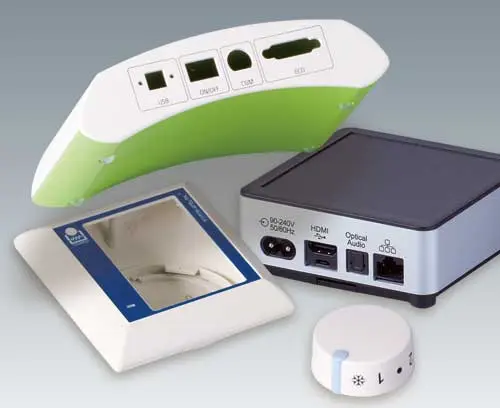
 Accessories for enclosures
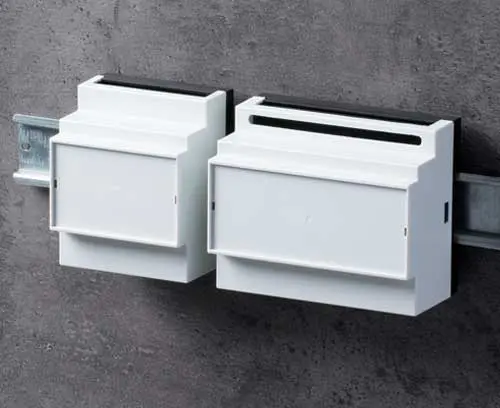
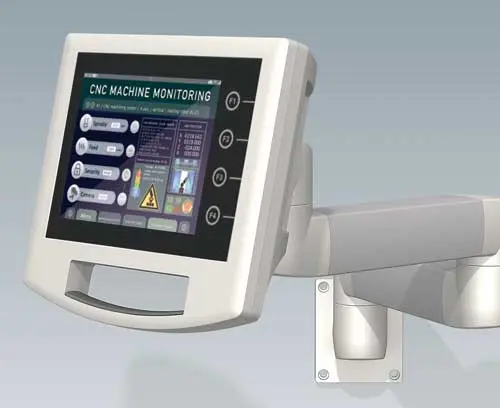
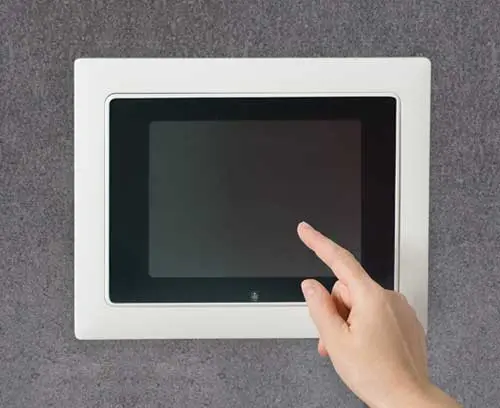

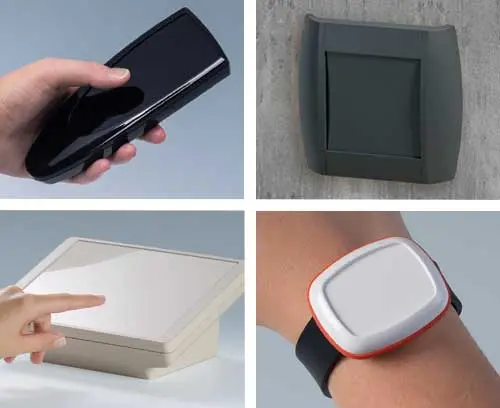
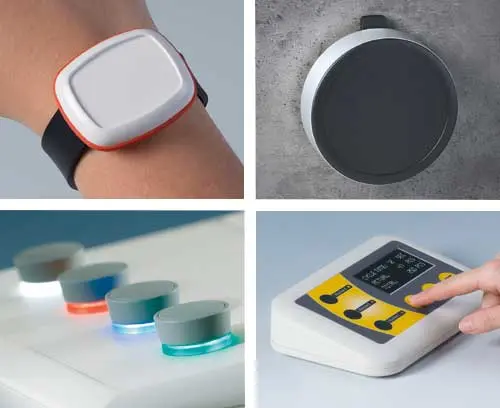 Plastic enclosures Advanced plastic enclosures for electrical and electronics equipment
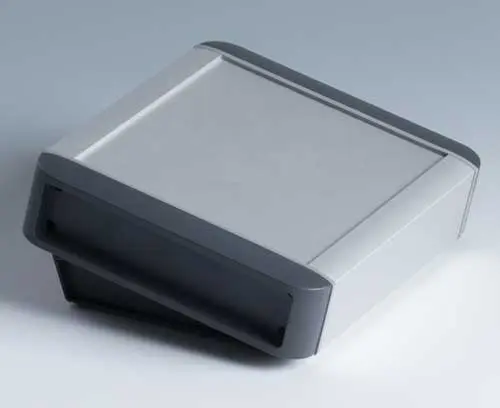
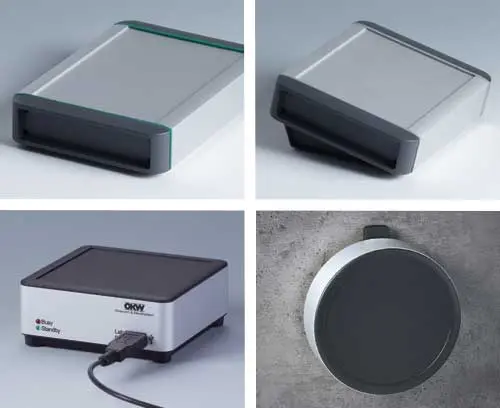
 Aluminium enclosures High quality aluminium profile enclosures with attractive plastic end panels
 Potentiometer / Tuning knobs Extensive range of tuning knobs: ergonomic, modern and classic designs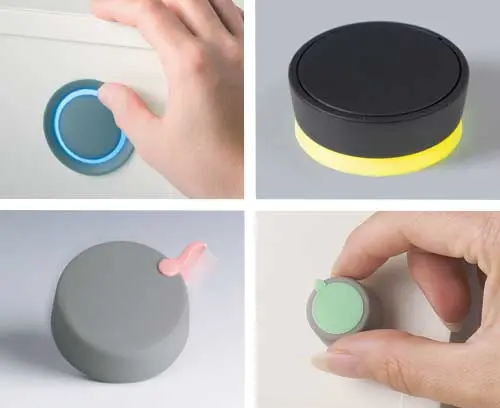
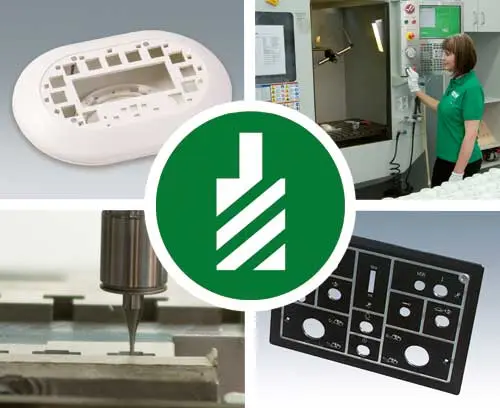
 Machining Fast, high quality and accurate machining to your specifications
 Lacquering We can lacquer our products with highly attractive and tough finishes for demanding use
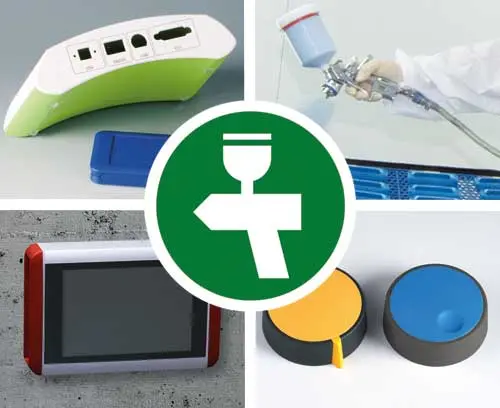 Printing We can print enclosures, front panels and tuning knobs using screen/tampo printing and digital printing
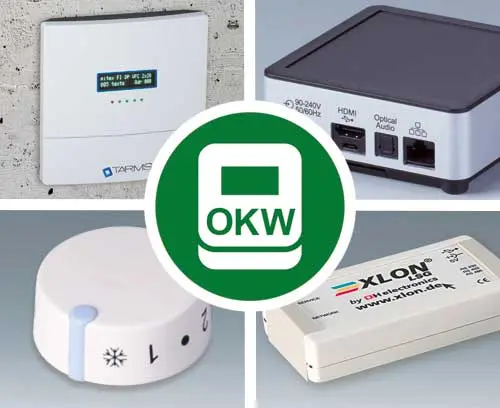 Laser marking We offer laser marking for numerous enclosures and components from our standard range
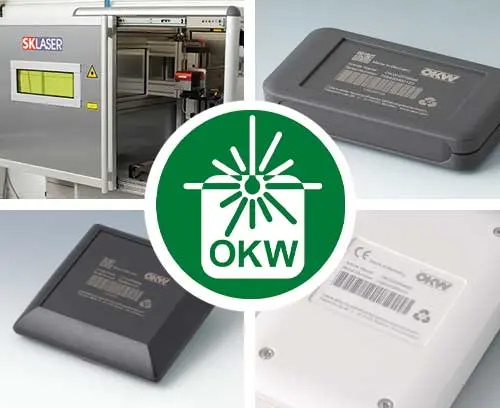 Decor foils We can print decor foils digitally, in photo quality, for labelling the enclosures
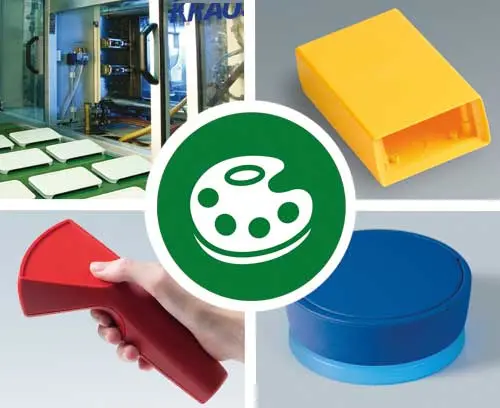
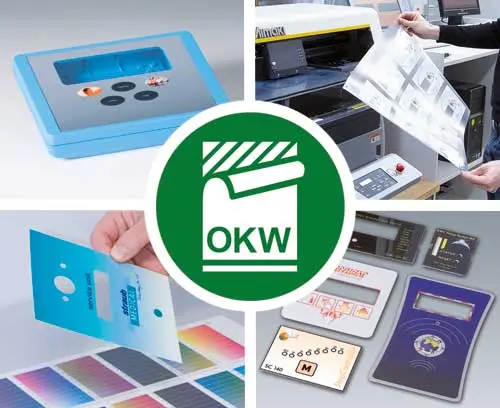 Special material We can also mould our plastic enclosures and tuning knobs in special colours
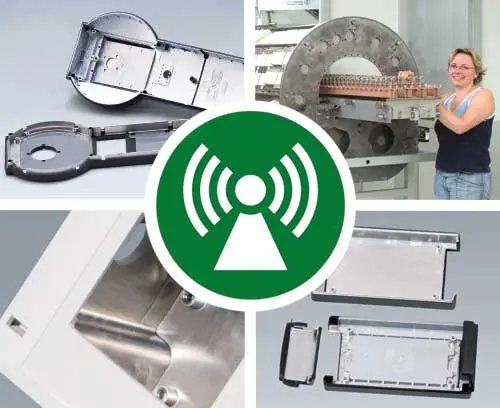
 EMC shielding Order your plastic enclosures coated with aluminium on the inside to protect against RFI/EMI
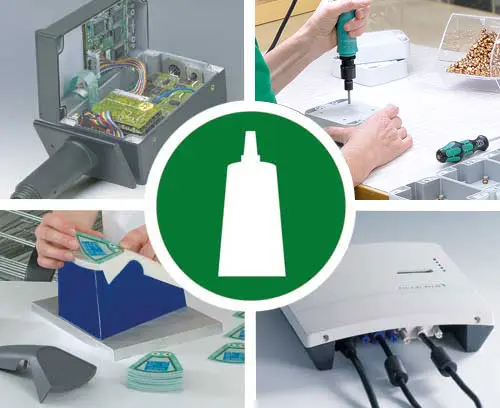
 Installation / Assembly of accessories We perform assembly work to complete the enclosure assembly or device
 Partner solutions We cooperate with expert partners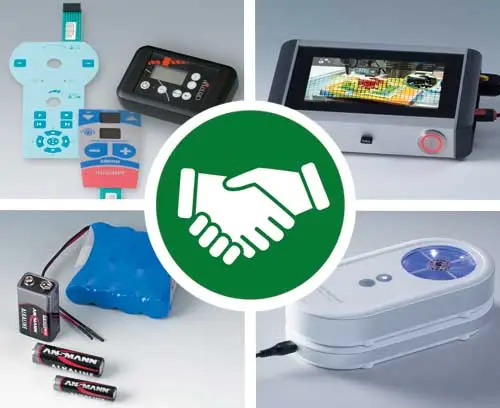
 Medicine / Laboratory / Wellness Man and ergonomics
 Measuring / Control / Automation Man and precision
 Mechanical engineering / Plant building Man and production
 Automotive / Railway / Construction / Agriculture Enclosures for vehicle and machinery applications
 Military / Defence / Aviation / Marine Enclosures for safety-critical applications
 Heating / Climate / Environment Man and efficiency
 Security / Building services systems Man and technology
 Communication Man and information
 Mining / Gas / Oil Man and raw materials
 News
News Blog
Blog
 HOW TO GET A SAMPLE OR QUOTE
 HOW TO DOWNLOAD OKW DRAWINGS
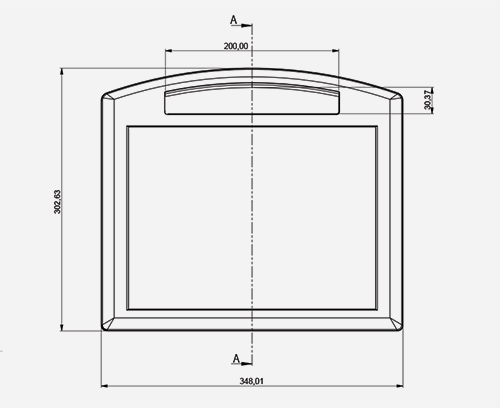 FREQUENTLY ASKED QUESTIONS (FAQ) Frequently asked questions (FAQ) about plastic enclosures, aluminium enclosures and potentiometer tuning knobs for electronicsDOWNLOAD AREA
 ORDERING INFORMATION
 YOUR GUIDE TO SPECIFYING ENCLOSURES
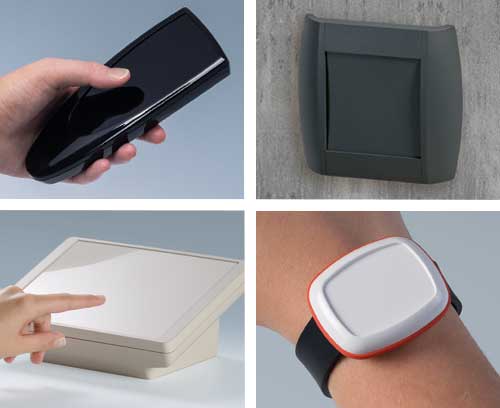 PLASTICS USED FOR OUR ENCLOSURES
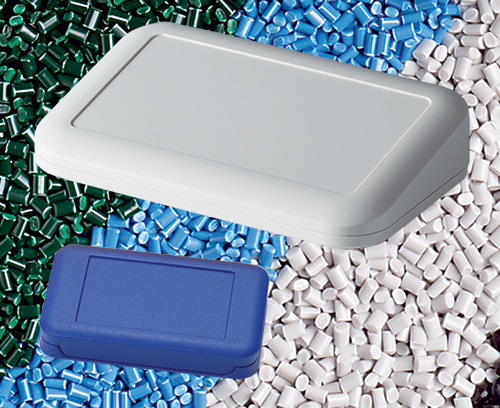 IP RATINGS EXPLAINED
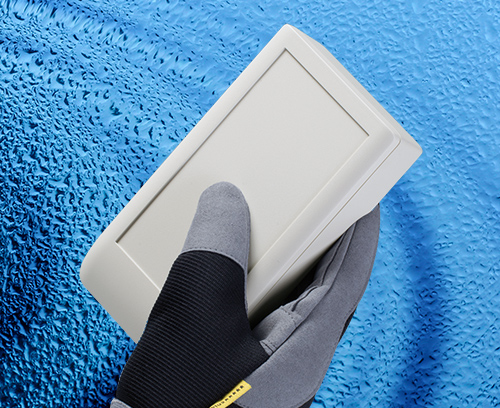 UL94 FLAMMABILITY TESTS EXPLAINED
 DOCUMENT VIEWERS & PLUG-INS
 70 YEARS OF INNOVATION
 PRODUCT DESIGN AWARDS
 ENVIRONMENTAL POLICIES
 OKW PRIVACY POLICY - GDPR (EU) 2016/679
 OKW COOKIE POLICY
 GENERAL ENQUIRIES FORM
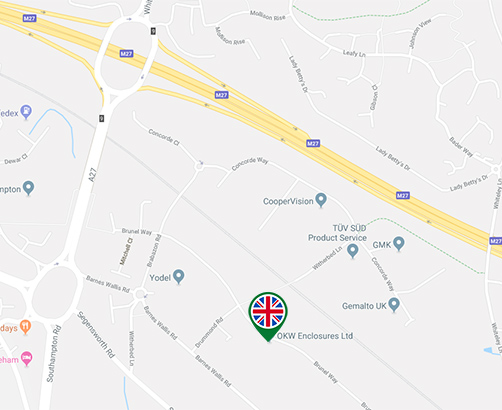
 HOW TO FIND US
 Worldwide Sales Network